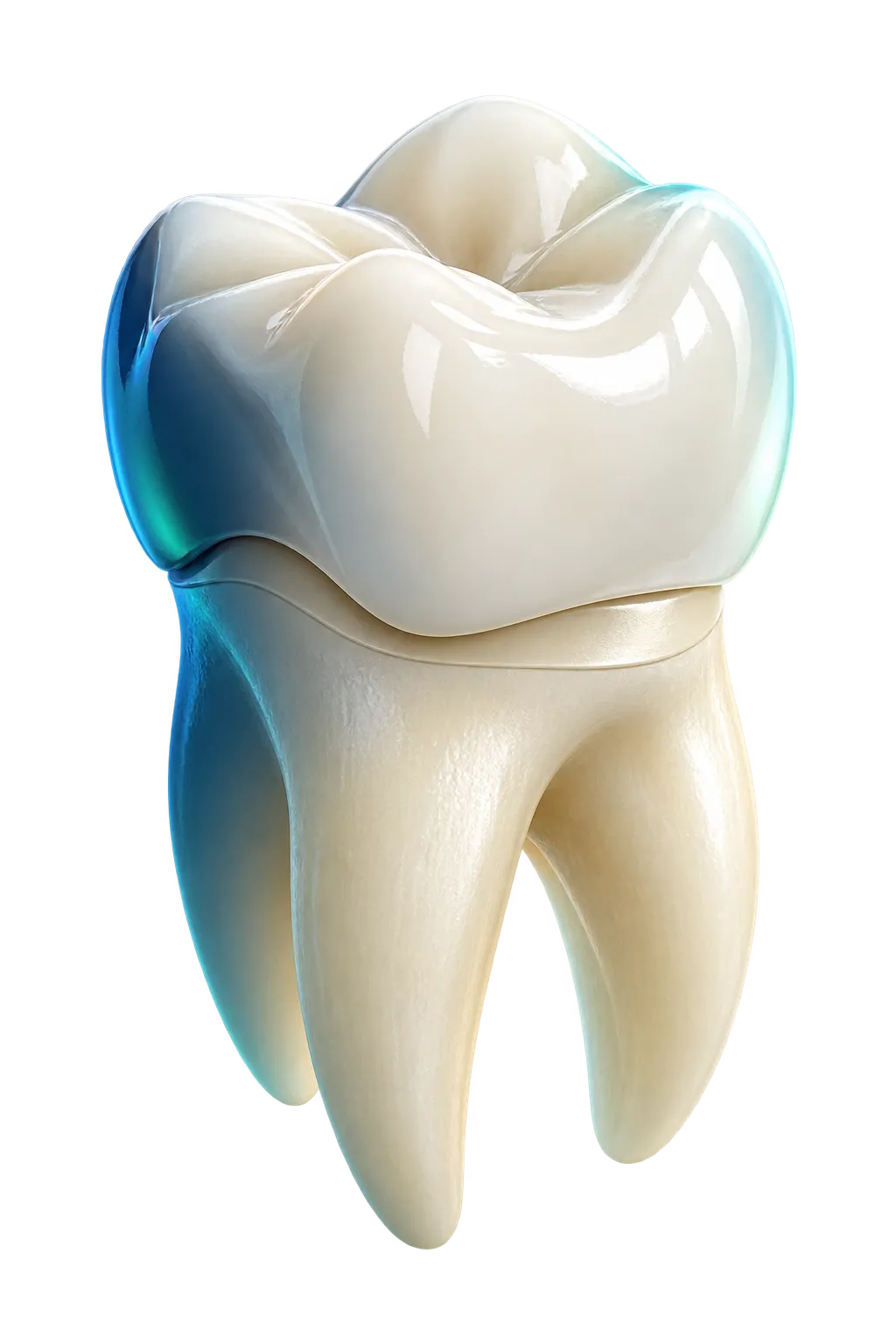
Occlusal
The chewing surface of a molar: the top that contacts the tooth in the opposing jaw.
Search codes, articles and glossary terms
No result yet. Try a code, treatment or term.
Fillings explained
Dentists use surfaces to name exactly where a filling or other procedure is located. That makes a “two-surface filling” much less abstract.
Back to dental codes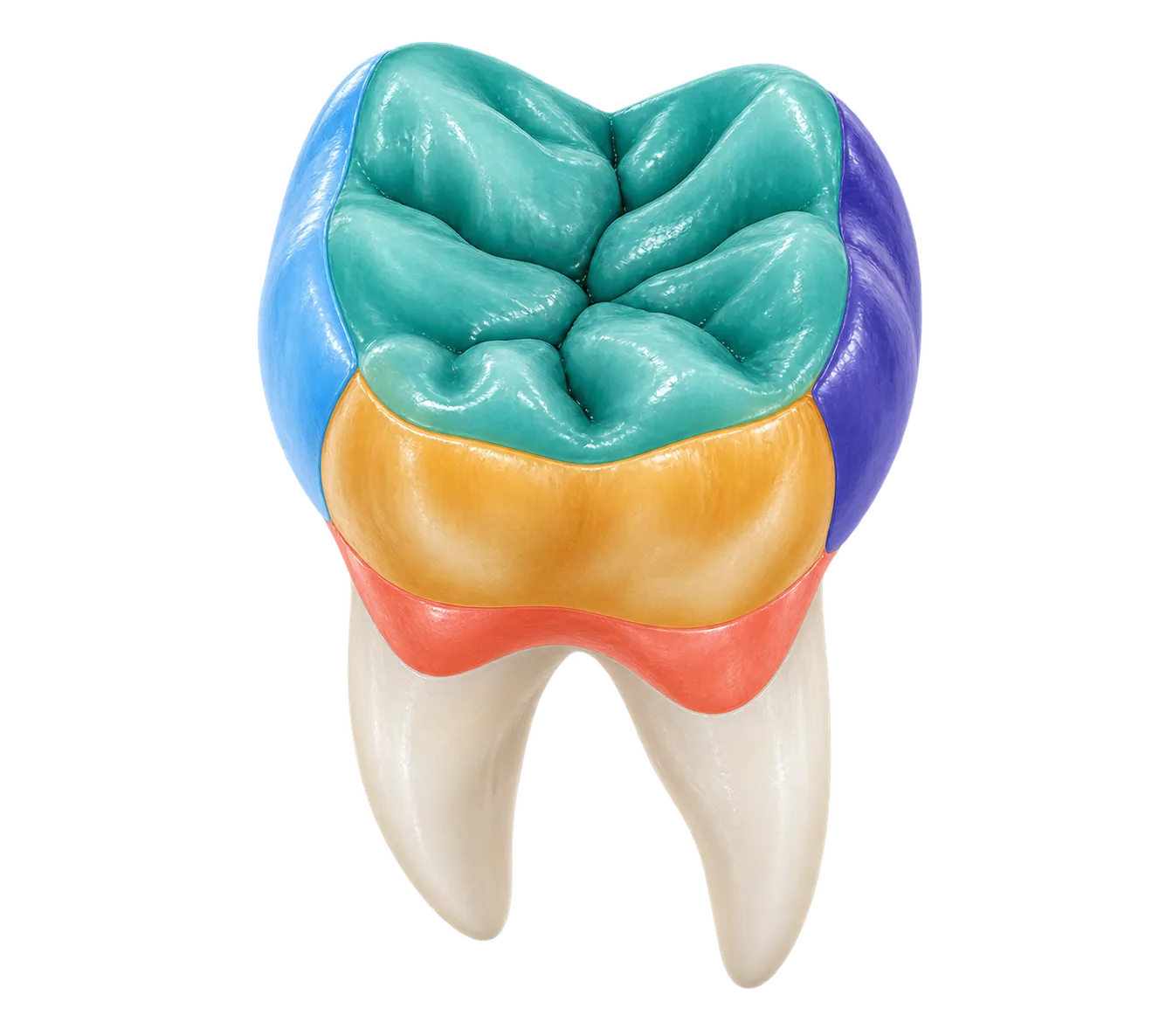
The map of one molar
A filling is not only “a cavity”; its place on the tooth matters too. That is why a code describes how many surfaces belong to one restoration.
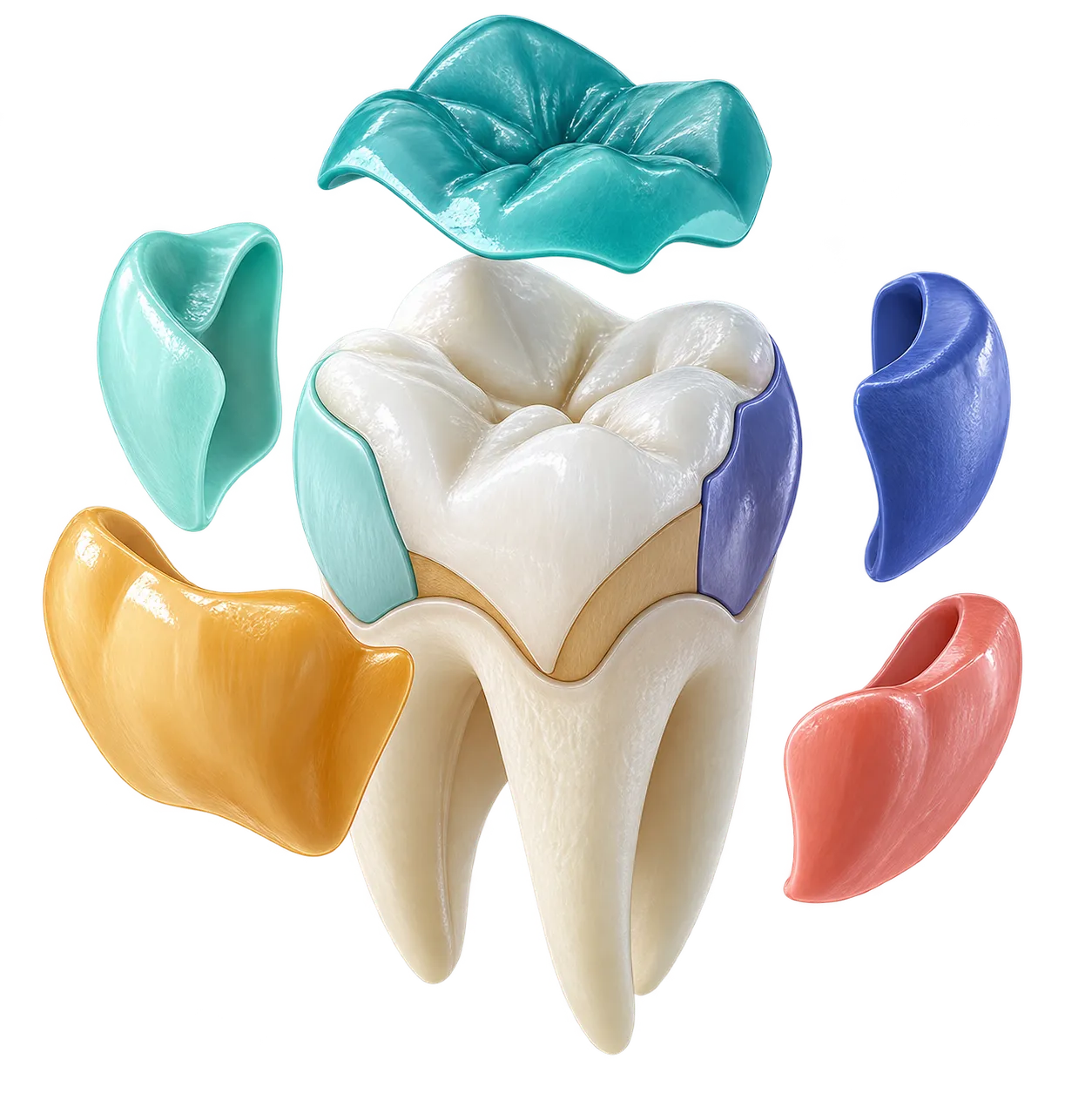
The chewing surface of a molar: the top that contacts the tooth in the opposing jaw.
The side pointing towards the centre line of the dental arch.
The side pointing away from the centre line of the dental arch.
The outside facing the cheek. For front teeth, “labial” is often used for the lip side.
The inside facing the tongue; for upper teeth this side is also called palatal, towards the palate.
Why can this appear on an invoice?
For composite fillings, V91 to V95 describe the extent of a restoration on one tooth. These are maximum tariffs per performance; a plan or invoice can also show other, separate lines.

About the maker

ODENTAL.SYSTEMS
Multilingual by design
Work in a language that feels familiar.
Built in the Netherlands. Adaptable for practices across Europe and beyond. Before use in another country, we agree the necessary changes to language, tariffs, privacy requirements and workflows.
Other languages on request.